A Practical Fabric Guide for Women's Activewear
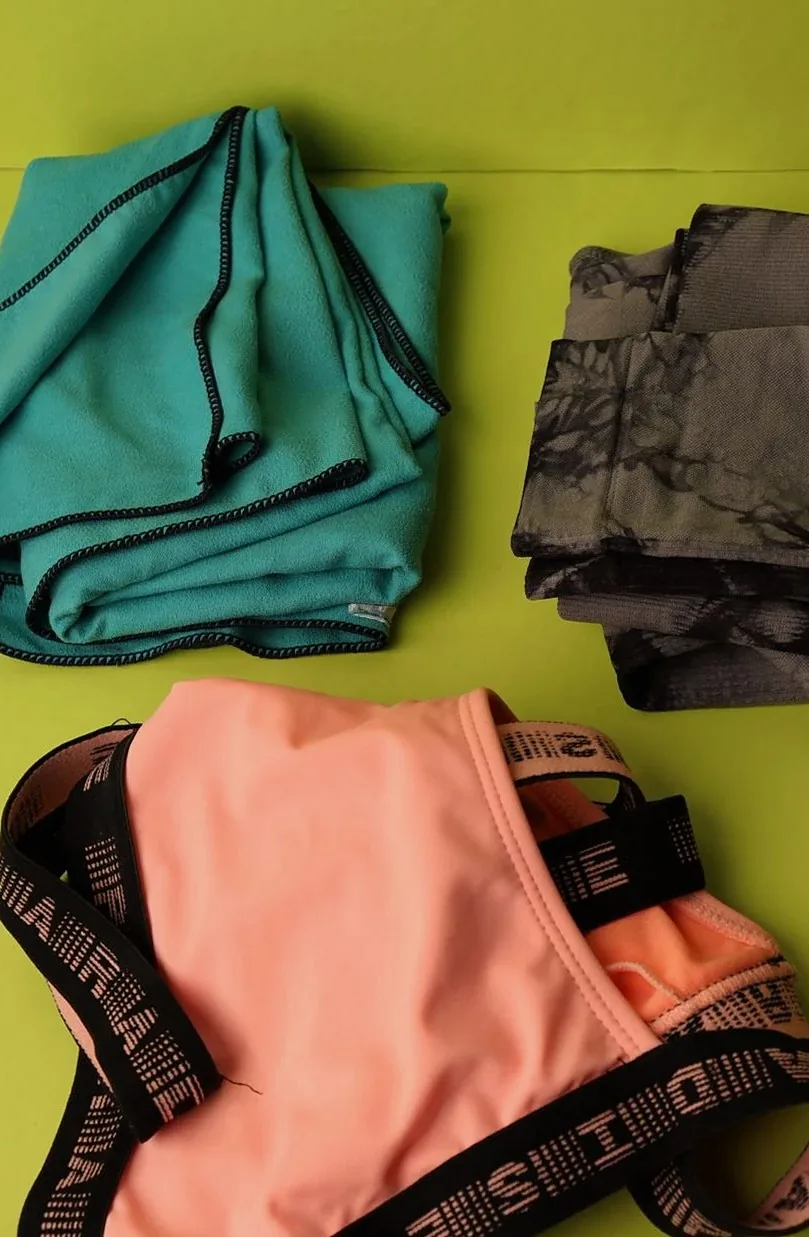
The fabric composition printed on an activewear label is one of the most useful pieces of information on the garment, and one of the least read. Understanding what the percentages mean in practice, not in marketing language, helps you make better buying decisions and avoid the most common disappointments: pilling, transparency, waistband failure, and colour loss.
Polyamide and elastane: the legging standard
Most performance leggings are a blend of polyamide (also called nylon) and elastane (also called spandex or Lycra). A ratio of around 78% polyamide to 22% elastane is a reliable starting point for a legging that has good stretch recovery, holds its shape after washing, and does not go transparent under load.
Higher elastane percentages are not always better. Above 25-30%, the fabric can feel clingy and may lose its shape faster over time. Below 15%, the stretch recovery is often insufficient for high-intensity training.
French terry and fleece: the hoodie question
French terry is a looped knit fabric with a smooth face and a looped interior. It is the standard construction for training hoodies and joggers. The weight is measured in grams per square metre (gsm). A 280-320 gsm French terry is warm enough for an indoor gym session and light enough to layer under a jacket outdoors.
Brushed fleece is a French terry that has been mechanically brushed on the interior to raise the fibres and create a softer, warmer surface. It is noticeably warmer than standard French terry at the same weight, which makes it the better choice for outdoor training in autumn and winter.
Ribbed jersey: why the rib direction matters
Ribbed jersey is a knit fabric with alternating raised and recessed columns. When the rib runs vertically, it elongates the torso visually. When it runs horizontally, it adds width. For sports bras and long-sleeve tops, a vertical rib is almost always the more flattering choice for a wider range of body types.
The weight of the ribbed jersey matters as much as the direction. A medium-weight rib (around 200-240 gsm) holds its shape through a training session without becoming see-through when stretched. Lighter ribs are prone to transparency and tend to lose their structure after repeated washing.
What the label does not tell you
Fabric composition does not tell you about seam construction, waistband elastic quality, or how the dye will hold after twenty washes. These are the factors that most often determine whether a piece lasts two years or two months, and they can only be assessed through wear-testing over time. This is why the buying process at Plateau Attic takes a minimum of six months per sample.
If you are unsure about a specific piece, the size notes in the current collection include fabric details and wash-test results for each style. Questions about specific compositions can also be sent through the contact form.